AI math breakthroughs revive Bitcoin security fears, but practical threat remains unproven: K33
Article syndicated from The Block. · Original article ↗
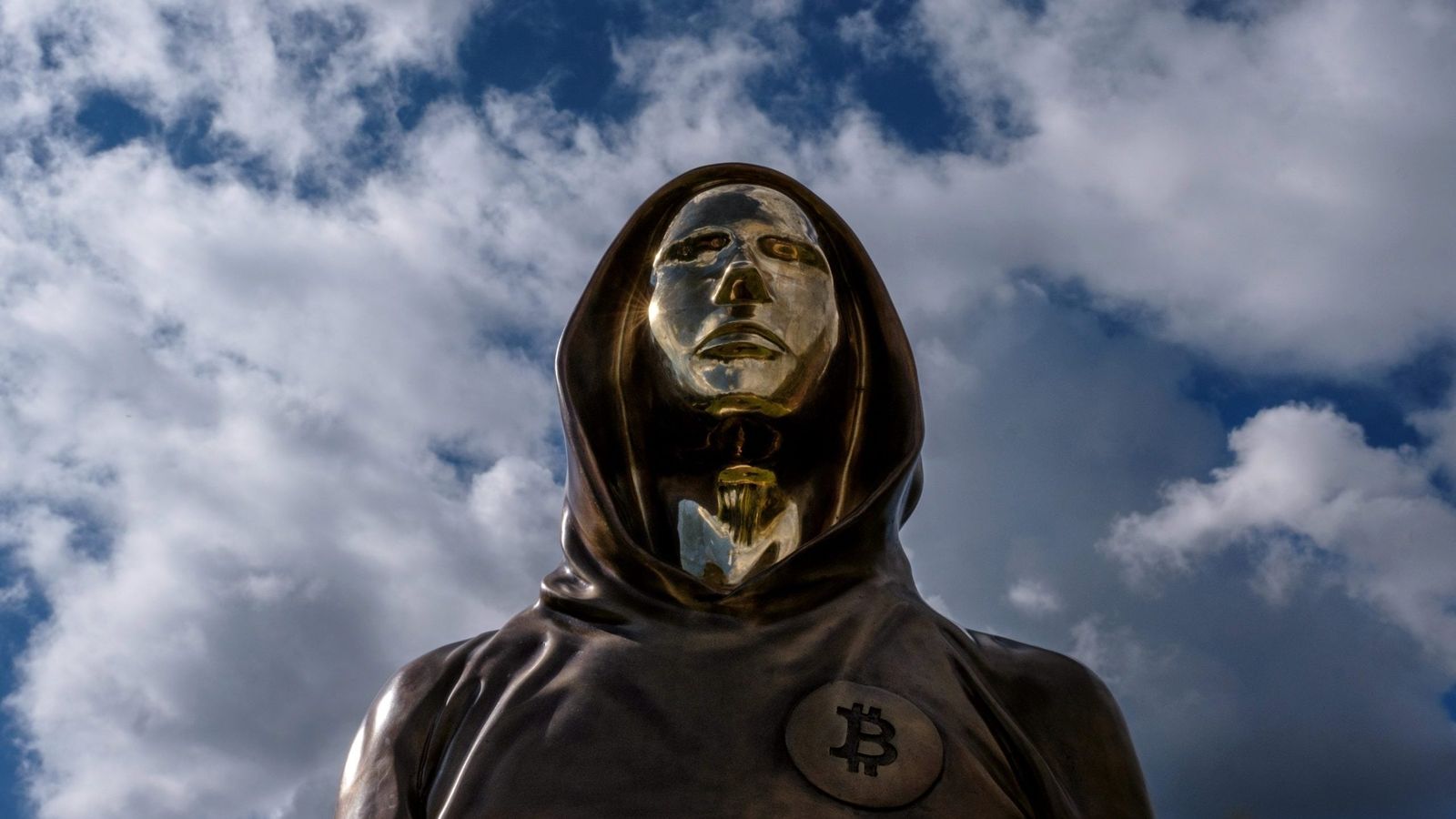
K33 said recent mathematical advances had not demonstrated a compromise of Bitcoin's cryptography, while urging closer attention to AI.
AI's progress in mathematics warrants closer attention to Bitcoin's cryptographic security, but recent mathematical breakthroughs have not demonstrated a compromise of its cryptography, analysts at research and brokerage firm K33 said Friday.
Anthropic mathematician Levent Alpöge last week announced a proposed proof of the Riemann hypothesis, a conjecture dating to 1859 about the distribution of prime numbers. He worked on the problem using Claude. Independent researchers have checked the proof computationally, with academic review still ongoing.
"Naturally, this has reignited fears surrounding the mathematical assumptions underpinning Bitcoin and modern cryptography," the analysts wrote, though the Riemann proof does not itself provide a way to attack cryptography.
Another recent debate in the crypto industry focused on P versus NP, with implications extending to modern banking systems, secure internet communications, and digital signatures.
Bitcoin'sBitcoin (BTC) transaction signatures rely on how difficult it is to derive a private key from a public key, while the reverse is relatively easy, K33 said. To explain P versus NP, the analysts described the analogy of a large Sudoku puzzle. Verifying the answer is relatively easy, whereas finding the solution itself is substantially more demanding, they said.
"In simple terms, P represents problems that can be solved efficiently, while NP represents problems for which a proposed solution can be verified efficiently," the analysts said. If P equals NP, an algorithm must exist to solve even arbitrarily large Sudoku puzzles in polynomial time, meaning that the computational effort grows at a mathematically manageable rate as the puzzle grows, they said.
Mathematical and practical limits
For Bitcoin, proving P equals NP would mean an algorithm must theoretically exist to derive private keys in polynomial time, K33 said. The analysts cited computer scientist Donald Knuth, who has long argued that P may equal NP but that proving it might not be of much use. A proof would not necessarily tell anyone how to build the algorithm, they said, and even if it could, it might still take too long to run.
However, proving P does not equal NP, the prevailing belief among computer scientists, would not guarantee Bitcoin's security either, as faster algorithms targeting its particular cryptography could still emerge, the analysts said.
"For now, P versus NP remains unsolved, and recent mathematical breakthroughs do not establish that Bitcoin's cryptography has been compromised," they said.
Earlier this week, Zcash infrastructure team Zakura urged users to migrate away from its legacy Sapling shielded pool, citing the Riemann claim and unsubstantiated rumors of advances in integer factorization. "Practical pairing breaks are highly speculative," Zakura said. Neither factoring nor pairings is used by the Ironwood shielded pool or transparent transactions, according to the team.
Meanwhile, the Ethereum Foundation recently doubled its protocol security team, saying AI was a "more urgent risk" than quantum computing, with models finding software vulnerabilities and beginning to improve on decades-old algorithms. However, that did not mean AI can or will break the assumptions that cryptography relies on, the foundation said. It is working toward a 2029 internal deadline to introduce alternative hash-based cryptography for validators, user accounts, and data blobs.
The complete story is published by the original publisher. Everything we can syndicate is shown above.
Open original ↗