Trump Crypto News: World Liberty Financial Sells $20 Million in Ethereum Assets, Data Shows
Article syndicated from NewsBTC. · Original article ↗

Key takeaways
A wallet linked to World Liberty Financial sold 10,600 WETH and 1,378 mETH for about $20.06 million.
Proceeds went into about $17.58 million USDC and $2.48 million USD1, the project’s own stablecoin.
On-chain analyst Ember estimates a cost of $3,244 per ETH against a disposal value near $1,655, implying a loss of about $19.26 million.
The loss is an on-chain estimate, not an audited figure, and the sale covers one wallet rather than the project’s full holdings.
The move reverses earlier Ethereum buying, and there is no verified evidence that Donald Trump personally directed the trades.
Trump-backed crypto project World Liberty Financial has reportedly reduced its Ethereum exposure by approximately $20 million, converting two large holdings into dollar-pegged stablecoins during the latest cryptocurrency market downturn.
Blockchain monitoring platform Lookonchain reported that a wallet associated with the project sold 10,600 ETH and 1,378 mETH, receiving approximately $20.06 million.
Separate estimates from on-chain analyst Ember suggest the assets may have been sold at a loss of more than $19 million.
The transactions come just weeks after World Liberty Financial announced a WLFI token buyback program, which could be partly funded by income generated from its USD1 stablecoin reserves.
The Ethereum sales represent a notable reversal for a project that previously accumulated the cryptocurrency during periods of market weakness. Where the money went, however, deserves just as much attention as what was sold.
World Liberty Financial Moves Into Stablecoins
The reported transactions involved approximately $17.58 million in USDC and another $2.48 million in USD1, World Liberty Financial’s own dollar-pegged stablecoin.
Transaction records from Arkham show a series of transfers between World Liberty Financial’s labeled Strategic Reserve wallet and CoW Protocol, involving outgoing mETH and incoming USD1. The wallet also interacted with decentralized lending protocol Dolomite.
The Ethereum assets included wrapped ether, known as WETH, and mETH, a token representing exposure to staked Ethereum.
The latter distinction matters because a liquid staking token does not necessarily trade at a one-to-one ratio with ETH. Simply adding the number of WETH and mETH tokens together can give a misleading picture of the underlying Ethereum exposure.
According to Ember’s estimates, the combined holdings represented approximately 12,121 ETH in equivalent exposure.
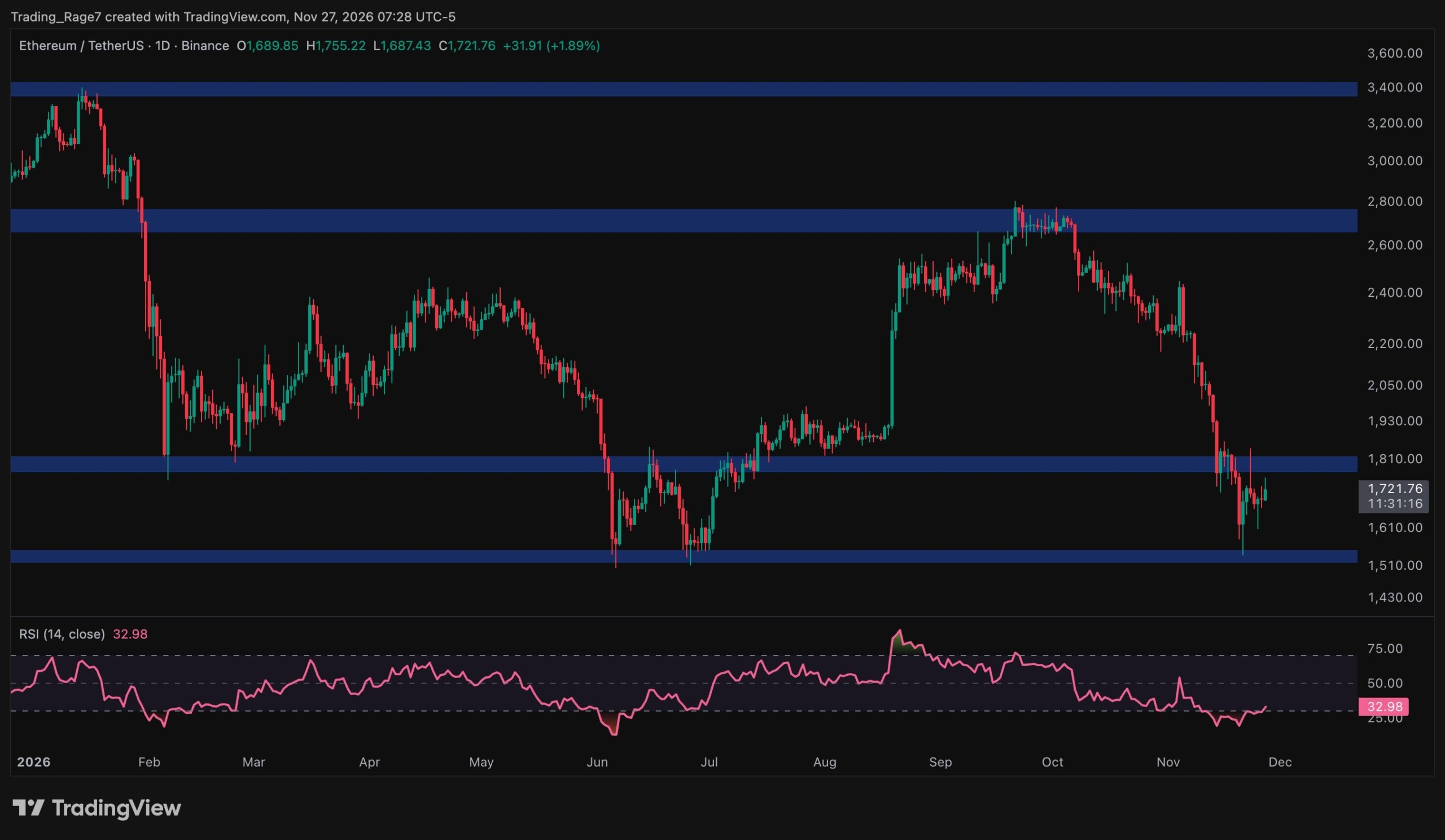
The analyst estimated an average acquisition cost of $3,244 per ETH, compared with an average disposal value of approximately $1,655.
If that cost-basis estimate is accurate, the transactions would represent a loss of roughly $19.26 million, or close to half the original investment.
Transaction Reported figure
Sold 10,600 WETH + 1,378 mETH
Ethereum-equivalent exposure ≈12,121 ETH
Received $17.58M USDC + $2.48M USD1 = $20.06M
Estimated average cost $3,244 per ETH (≈$39.3M)
Average disposal value ≈$1,655 per ETH
Estimated loss ≈$19.26M (about 49%)
World Liberty Financial’s reported Ethereum sale. Cost basis and loss are on-chain estimates, not audited results. Data: Lookonchain, Ember. Visualization: NewsBTC.
World Liberty Financial has not been shown to have confirmed that loss in a public accounting statement. The figure remains an on-chain estimate rather than an audited financial result.
Why the USD1 Transaction Matters
World Liberty Financial’s decision to move part of the reported proceeds into USD1 raises questions beyond the performance of its Ethereum investments.
In its official USD1 risk disclosures, World Liberty Financial acknowledges that its financial interests and those of BitGo may differ from those of USD1 holders. Both benefit from net fees earned through interest on the stablecoin’s reserves, while USD1 holders are not entitled to those earnings.
That makes USD1 more than another cryptocurrency held in the project’s treasury. It is part of the business through which World Liberty Financial seeks to generate revenue from its digital-dollar product.
Holding USD1, however, does not automatically generate a return for the wallet that receives it. Nor does an exchange of existing tokens necessarily increase the stablecoin’s circulating supply or reserve income.
The relevant question is whether the transactions represent temporary treasury management or a broader change in the project’s investment strategy.
A Reversal of Its Earlier Ethereum Strategy
In January, NewsBTC reported that World Liberty Financial had acquired approximately 2,868 ETH after selling more than $8 million worth of wrapped Bitcoin.
The November transactions point in the opposite direction, with the reported wallet moving away from Ethereum-linked exposure and toward dollar-denominated assets.
It would nevertheless be misleading to conclude that World Liberty Financial has abandoned Ethereum entirely. The activity concerns a specific wallet, and the project’s broader holdings across other addresses have not been established by these transactions.
Data from Arkham Intelligence shows that the project’s labeled Strategic Reserve wallet held approximately $243.8 million in digital assets on November 28. Notably, more than 96% of that valuation came from its own WLFI token, while the wallet retained 2,000 ETH worth approximately $3.32 million.
The concentration raises a separate question about the reserve’s exposure to fluctuations in the price of its own token. Its reported portfolio value should not necessarily be confused with readily available liquidity.
The complete story is published by the original publisher. Everything we can syndicate is shown above.
Open original ↗